 Cambrils: Discover Catalonia’s Wonderful Costa Daurada
We made our first trip to Catalonia in a number of years, visiting Girona and Cambrils in wonderful April weather. After Ireland’s seemingly endless winter rains, it was great to escape to the Mediterranean, where sunshine, pleasant temperatures and beautiful scenery provided a welcome change. Having spent a few days exploring Girona, we continued our journey by train towards Cambrils, an attractive coastal resort on Spain’s Costa Daurada.
The Costa Daurada, meaning the Golden Coast, is home to several popular holiday destinations, notably Salou, Cambrils and the historic city of Tarragona. Irish holidaymakers have long been attracted to this part of Spain, but there is a growing desire among local tourism representatives to spread the word about the region’s wider attractions. As Vadim from Cambrils Tourism explained to us, this is not simply a sun-and-beach destination. Venture a little further inland and you will discover spectacular mountains, medieval villages, vineyards, historic gardens and fascinating stories of local enterprise.
What makes this part of Catalonia particularly appealing is the variety of experiences available within a relatively short distance. You can spend the morning exploring a mountain village, enjoy lunch and wine tasting in the countryside and return to the Mediterranean coast for an evening stroll along the harbour.
Getting There
Our journey began in Girona, from where we travelled by train towards Cambrils after spending several days exploring the city. For visitors travelling directly to the Costa Daurada, Reus Airport is a convenient option, being considerably closer to the coastal resorts than Barcelona Airport. Depending on your destination and traffic conditions, a taxi journey from Reus can be relatively short.
Barcelona is another useful gateway for international visitors, particularly those wishing to combine a city break with a Mediterranean holiday. Railway and bus services connect different parts of the region, while local buses, bicycle hire and seasonal boat services make exploring the coastline relatively straightforward.
Hiring a car provides greater flexibility for those interested in visiting the mountain villages and vineyards inland. However, the winding mountain roads can be challenging, and guided excursions may offer a more relaxing alternative, particularly for visitors unfamiliar with driving in this part of Spain.
Exploring the Destination
The Spectacular Montsant Mountains
One of the highlights of our visit was a road trip with Vadim from Cambrils Tourism into the Montsant mountain region, within relatively easy reach of Cambrils and Salou. It was a beautiful Sunday morning, and as we travelled inland through mountain valleys, we encountered numerous cyclists training with their local clubs. The winding roads, steep climbs and magnificent scenery would certainly make an impressive stage of the Vuelta, Spain’s famous cycling race.
The landscape changes considerably as you leave the coast behind. This is a strong agricultural region, with vegetable growing, olive groves and vineyards becoming increasingly prominent as the roads climb into the hills. Grapevines flourish on land that might otherwise be difficult to cultivate, while dramatic limestone cliffs tower above the valleys, creating some truly spectacular scenery.
The white limestone rock formations are the result of ancient marine sediments deposited millions of years ago. Looking across the valleys, with their towering cliffs and deep ravines, one could almost imagine being in the Grand Canyon. What is particularly remarkable is that within approximately an hour, you can leave this dramatic mountain landscape behind and find yourself back beside the Mediterranean.
There are magnificent sunsets in the mountains, and visitors with more time may wish to spend a night or two in one of the villages. We chose to return to our accommodation near the marina in Cambrils, but the experience certainly demonstrated how much more this region has to offer beyond its coastal resorts.
Siurana: A Medieval Village Above the Clouds
Our journey took us to the extraordinary mountain village of Siurana, perched high above the surrounding countryside at an altitude of approximately 800 metres. The approach involves a series of winding uphill roads, but the spectacular views that await visitors make the journey worthwhile. From the village, you can look across imposing cliffs, deep valleys and the reservoir far below.
Siurana has a fascinating history, with its strategic mountain location making it an important defensive settlement during the period of Muslim rule in the Iberian Peninsula. The village was among the last Muslim strongholds in Catalonia before falling to Christian forces in the twelfth century. Remains of its medieval castle can still be seen today, providing a reminder of the struggles that once took place in this seemingly peaceful location.
Local legends have grown around the fall of the settlement, including the story of a Moorish queen who, rather than surrender, is said to have ridden her horse over the edge of the cliffs. Whether legend or historical reality, the story adds another layer of intrigue to this remarkable village.
Walking through Siurana’s narrow streets and looking out across the surrounding mountains, it is easy to appreciate why the village attracts visitors interested in history, photography, walking and climbing. There are also small hotels and restaurants where visitors can enjoy a meal or spend the night, allowing more time to appreciate the scenery and tranquillity of the area.
For Irish holidaymakers accustomed to spending most of their time beside the Mediterranean, Vadim believes that a journey into the mountains could provide an entirely different and memorable holiday experience. Having seen the scenery for ourselves, we would certainly agree.
History & Culture
The Historic Vineyards of Priorat
Another enjoyable part of our mountain excursion was a visit to the Atavus organic winery in the Priorat wine region, near the village of Gratallops. Here, we met Paloma, a member of the family behind the enterprise, who introduced us to the traditions, challenges and considerable dedication involved in producing organic wine.
The Priorat region has a long association with winemaking, influenced by the Carthusian monks who established the monastery of Scala Dei during the medieval period. The monks played an important role in developing the area’s agricultural and winemaking traditions, leaving a legacy that continues to shape the identity of the region today. The name Priorat itself reflects this monastic heritage.
The vineyards occupy steep hillsides where conventional agricultural machinery cannot always operate easily. Much of the work remains physically demanding, particularly during the grape harvest, when collecting and transporting grapes from difficult terrain requires considerable effort. Traditional techniques are still employed alongside modern methods, with clay vessels and metal tanks forming part of the winemaking process.
Paloma explained that organic wine production involves more than simply growing grapes without certain conventional agricultural chemicals. There are numerous procedures, inspections and administrative requirements involved in maintaining organic certification. Records must be kept, inspectors collect information and producers must demonstrate that they are meeting the required standards.
It is a labour-intensive occupation, and Paloma believes that anyone entering the industry must have a genuine passion for the work. The hours can be long and the physical demands considerable, but there is immense satisfaction in producing something of quality while working in such a peaceful and beautiful location. Watching the sun go down over the vineyards, she explained, provides a sense of fulfilment that is difficult to find in many other occupations.
We found her enthusiasm infectious. The winery is a multigenerational family enterprise with an interesting personal history. Following the Spanish Civil War, her father left for Venezuela before eventually returning to Catalonia, where traditional agricultural and winemaking methods continued to play an important role in the family’s business.
Paloma also spoke about the importance of biodiversity, encouraging bees and other wildlife while maintaining a healthy balance within the vineyards. For her, the future of the business depends not only on producing quality wine but also on whether the next generation will share the same enthusiasm for this demanding way of life.
Good marketing and distinctive branding are also essential, particularly as organic production can be more expensive. There is strong appreciation for Priorat wines both locally and internationally, with customers from Denmark, Germany, the Netherlands, Britain and the United States among those attracted to the region’s products. Our visit provided a fascinating insight into the people, traditions and landscapes behind a bottle of wine.
Food & Dining
Cambrils has a particularly strong association with Mediterranean cuisine, thanks in no small part to its fishing heritage and the agricultural richness of the surrounding countryside. Fresh seafood, locally grown vegetables, olive oil and regional wines contribute to a dining scene that is an important part of the town’s appeal.
Walking around the harbour, we found numerous restaurants with covered outdoor dining areas, providing comfortable places to enjoy a meal while overlooking the boats and waterfront. Whether seeking shelter from the strong Mediterranean sunshine or the occasional shower, these terraces offer an attractive setting in which to relax and appreciate the atmosphere of the fishing port.
We enjoyed some excellent tapas during our stay and were fortunate to experience a local seafood festival taking place along the harbour. Visitors were treated to samples of shrimp, prawns and potatoes, while local refreshments were available to purchase. Among the more unusual drinks was a special rum and coffee punch, enjoyed as people gathered to listen to traditional music and sea shanties.
The event created a wonderful community atmosphere, bringing together residents and holidaymakers in celebration of the town’s maritime traditions. It was a particularly enjoyable way to conclude our introduction to Cambrils and provided a reminder that some of the most memorable travel experiences are often those that happen unexpectedly.
The wider Costa Daurada also has a reputation for fine dining, with restaurants in both Cambrils and neighbouring Salou offering creative interpretations of Mediterranean cuisine. The region’s vineyards and agricultural producers provide an excellent foundation for restaurants interested in showcasing local ingredients, while the fishing harbour ensures that seafood remains central to Cambrils’ culinary identity.
Things to Do
Parc Samà: A Taste of Cuba in Catalonia
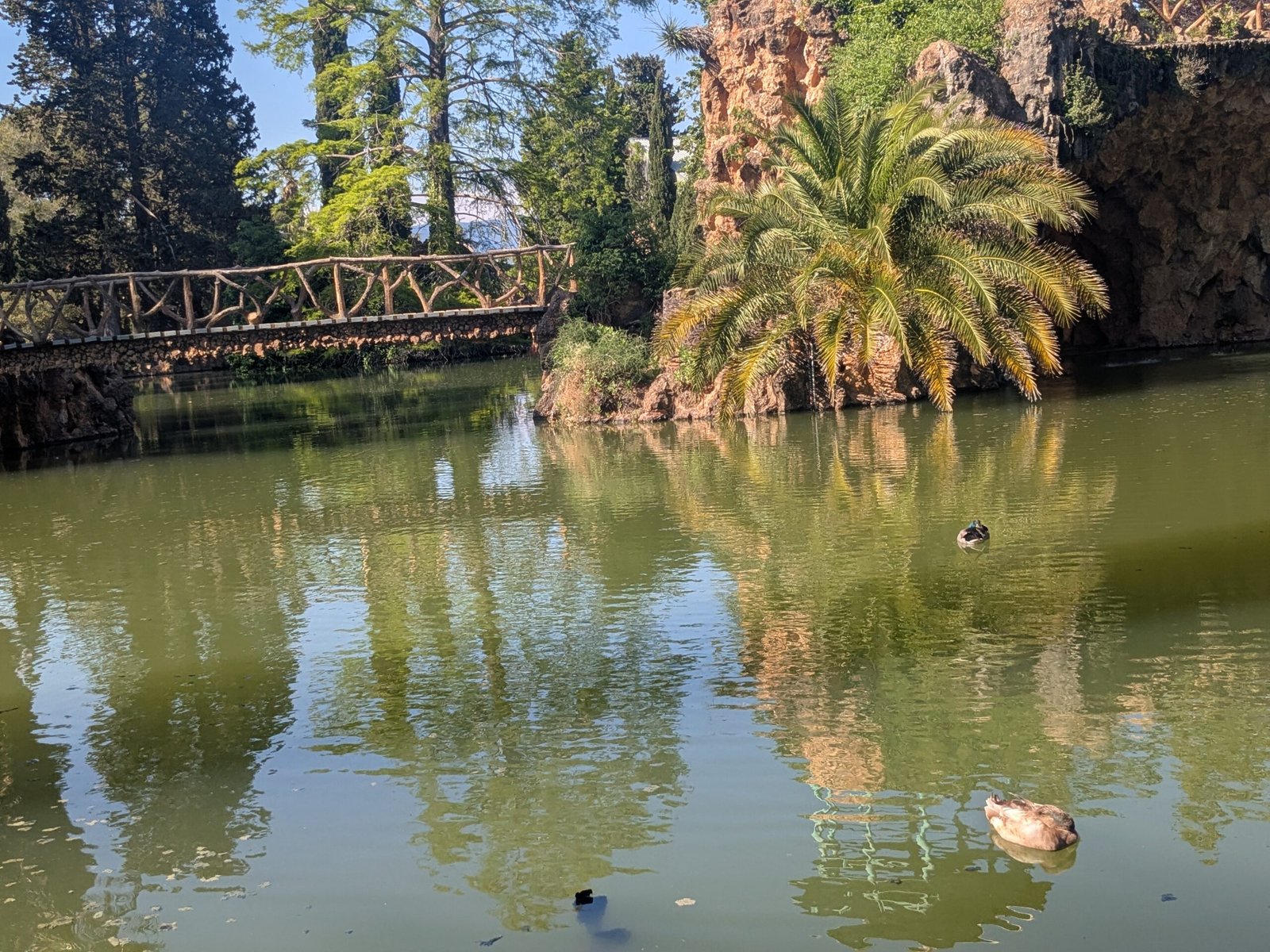
On our journey back towards Cambrils, we passed some exclusive hotels in the hills before visiting Parc Samà, an extraordinary historic garden estate located a short distance inland from the coast. Covering approximately 14 hectares, the gardens offer a fascinating combination of Mediterranean vegetation, tropical plants, ornamental lakes, historic architecture and unusual landscape features.
The estate reflects the influence of nineteenth-century connections between Catalonia and Cuba, with its exotic planting and architectural features creating an atmosphere quite different from the surrounding countryside. Banana trees, palms, wisteria and bougainvillea contribute to the colourful surroundings, while winding paths lead visitors past ponds, caves, lawns and the impressive old mansion.
We also encountered an interesting connection with the architectural heritage of Catalonia, with decorative rock structures recalling the imaginative natural forms associated with Antoni Gaudí and the wider Catalan architectural movement. Gaudí would later become internationally renowned for his extraordinary buildings in Barcelona, inspiring architects and designers far beyond Spain, including people in Waterford.
One of the most entertaining sights during our visit was the collection of peacocks wandering freely through the grounds. On a beautiful sunny day, they appeared to be putting on their own fashion parade, displaying their magnificent feathers as they moved around the gardens.
Parc Samà is an excellent attraction for visitors interested in history, horticulture, architecture or simply spending a few hours in peaceful surroundings. Its location within cycling distance of Cambrils also makes it an appealing excursion for those wishing to explore the countryside without hiring a car.
La Llosa Beach and the Mediterranean Coast
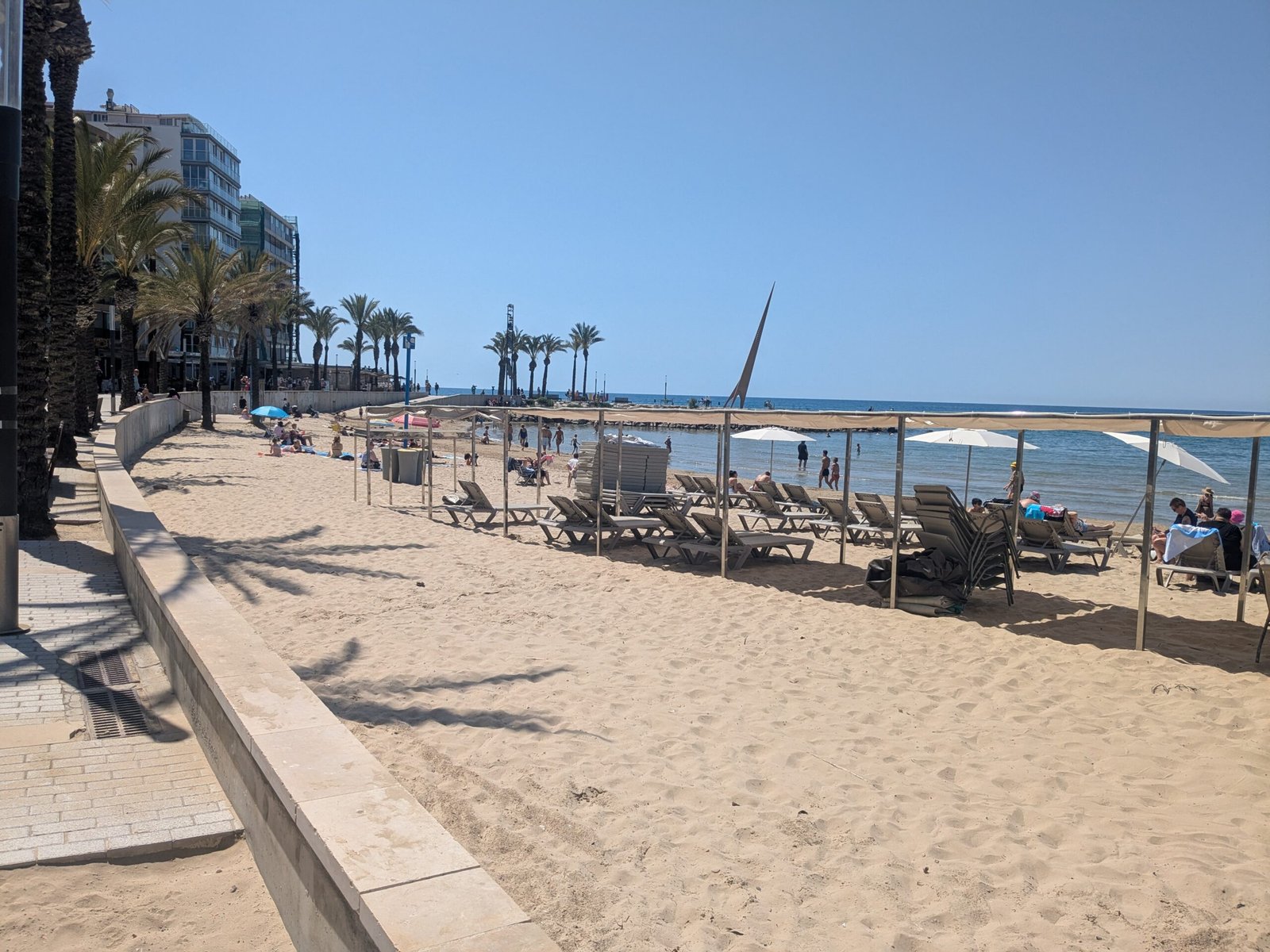
While the mountains, vineyards and gardens were all memorable discoveries, the real attraction of Cambrils for many holidaymakers remains its fishing harbour and extensive coastline. Speaking with Rachel from the local tourism team, we learned that camping holidays are also popular in the area, with visitors attracted by the beaches, outdoor activities and relaxed Mediterranean lifestyle.
We visited La Llosa Beach, located a little further along the coastline from the harbour. The walk took us past a park and across bridges serving pedestrians and cyclists, with a nearby stream where we could hear frogs croaking. It was another small but welcome illustration of the biodiversity that exists alongside the busy holiday resort.
The beach itself has lovely fine sand, reminding us somewhat of Tramore in County Waterford, rather than the stony beaches found in some other parts of the Mediterranean. It was well maintained, with cleaning teams, showers and recreational facilities, including a volleyball net. Seeing the latter made us wonder how long such a facility might survive the tides and winter storms back home in Tramore.
During our April visit, air temperatures were generally between 20°C and 24°C, while the sea temperature was around 15°C. Although the water was still relatively cool for swimming, the pleasant weather was ideal for walking, cycling and relaxing beside the Mediterranean without the intense heat of the summer months.
Cycling, Walking and Exploring the Harbour
Cambrils is particularly attractive for visitors who enjoy walking and cycling. The relatively flat coastal landscape, together with dedicated cycling routes and pedestrian pathways, makes it easy to explore different parts of the resort at a leisurely pace. Hiring a bicycle provides an excellent opportunity to visit several beaches, discover quieter areas of the coastline or venture inland towards attractions such as Parc Samà.
The fishing harbour remains at the heart of the town’s identity, providing an attractive setting for morning walks, afternoon refreshments and evening meals. Unlike destinations where tourism has almost completely replaced traditional industries, Cambrils retains a strong connection with its maritime heritage, which adds considerably to its character.
Neighbouring Salou is also within easy reach, offering a livelier atmosphere, additional beaches, entertainment and major family attractions such as PortAventura World. Visitors staying in Cambrils can therefore enjoy a more relaxed coastal experience while having access to the attractions of one of Spain’s best-known holiday resorts.
Where to Stay
Cambrils offers a wide variety of accommodation, including waterfront hotels, holiday apartments, guesthouses and camping facilities. We stayed near the marina, which provided a convenient base for exploring the harbour, restaurants, beaches and surrounding coastline. Being close to the waterfront also made it particularly enjoyable to return after a day spent exploring the mountains and countryside.
For those seeking a quieter experience, the areas around La Llosa Beach offer a more relaxed setting, while families may prefer accommodation close to the beaches and cycling routes. Visitors interested in exploring the vineyards and mountain villages could also consider dividing their holiday between the coast and the inland region.
During our excursion to Siurana, we noted the availability of accommodation at Hotel La Siuranella, where rooms were around €150 during the late spring period discussed. The village’s elevated position and attractive dining terraces make it an appealing option for anyone wishing to spend more time enjoying the mountain scenery.
There are also more exclusive accommodation options throughout the Priorat countryside, offering peaceful surroundings and spectacular views. Prices can vary considerably depending on the season, so booking ahead is advisable, particularly during popular weekends and holiday periods.
Local Tips
April and May are excellent months to consider visiting Cambrils, particularly if your interests extend beyond swimming and sunbathing. The more comfortable temperatures are ideal for mountain excursions, cycling, sightseeing and exploring historic villages, while the resort is generally less crowded than during the main summer holiday season.
If planning to visit Siurana and the Montsant mountains, allow sufficient time for the journey. The roads are narrow and winding in places, and cyclists are particularly numerous at weekends. Visitors who prefer not to drive may find organised excursions a convenient alternative, with the added benefit of local knowledge and historical information.
Wine enthusiasts should consider arranging a visit to one of the Priorat region’s wineries in advance. Meeting the producers and learning about the challenges of cultivating grapes in this distinctive landscape provides a much deeper appreciation of the wines than simply ordering a bottle in a restaurant.
It is also worth checking the local tourism calendar before travelling. Food festivals, cultural events and traditional celebrations can provide some of the most enjoyable experiences of a holiday, as we discovered during our visit to the Cambrils seafood festival. Above all, allow time to explore beyond the main resort, as some of the region’s greatest attractions lie just a short distance inland.
Final Thoughts
Our visit to Cambrils demonstrated just how much there is to discover along this wonderful stretch of the Catalan coastline. While the golden beaches, Mediterranean sunshine and attractive fishing harbour remain important reasons to visit, the surrounding mountains, historic villages, vineyards and gardens offer experiences that can transform a traditional beach holiday into something much more rewarding.
The spectacular scenery around Siurana and the Montsant mountains was a particular highlight, as was our introduction to organic winemaking in the Priorat region. Meeting people such as Paloma, whose passion for her family’s work was so evident, provided an insight into the traditions and dedication that help shape the character of this part of Catalonia.
Parc Samà offered another unexpected discovery, while the beaches and harbour of Cambrils provided the perfect setting in which to relax after our excursions. The seafood festival, with its local music, traditional refreshments and friendly atmosphere, was a fitting conclusion to our introduction to the resort.
Our thanks go to Maite, Vadim, Bertha and Rachel from the local tourism team, whose enthusiasm and knowledge helped us appreciate the diversity of experiences available throughout the region.
We left Cambrils with great memories and every intention of returning. For Irish visitors looking to escape the winter rains, enjoy Mediterranean cuisine and discover something beyond the familiar beach holiday, the Costa Daurada has much to recommend it.
Nearby Salou offers another fascinating chapter in the story of this wonderful coastline, but that is a journey for another day.
Related Articles
Vibrant Salou: Discover Spain’s Beautiful Costa Daurada
Girona: Discovering Catalonia’s Historic City
Montpellier: France’s Hidden Gem in the Sunny South
Saint-Émilion: Wine, History and French Heritage
Évora: Gateway to Alentejo and Eastern Portugal
Useful Outbound Links
Cambrils Tourism — Local attractions, beaches, events and visitor information.
Costa Daurada Tourism — Discover the wider region, coastal resorts and inland attractions.
Priorat Tourism — Mountain villages, vineyards, walking routes and regional heritage.
Parc Samà — Historic gardens and visitor information.
Catalonia Tourism — Travel inspiration, culture, gastronomy and destinations throughout Catalonia.
Renfe — Spanish railway services and journey planning.
By Kieran Walsh
Kieran’s Voyages — Travel Stories, Culture, Heritage & Discovery