A Surprising City Break
Armagh City proved to be a wonderful surprise as a destination to visit. We have crossed the border many times over the years, but had never properly explored Armagh until it was recommended to us for its history, architecture and cultural importance.
The city may still carry an image of cathedrals and prayer, known as the ecclesiastical capital of Ireland, while also having experienced its share of political troubles during past generations. Yet today, Armagh has emerged renewed and revitalised through restoration and investment following the peace process.
Settlement here dates back to the 5th century and St. Patrick himself, who was granted land for a church after reportedly curing a local chieftain’s family member. The city eventually received official city status in the 1990s and today has a population of approximately 15,000.
Georgian Beauty and the Famous Mall
Apart from our home city of Waterford, Armagh may well boast one of the finest Georgian malls in Ireland.
The Mall — a huge green open space lined with trees — was originally used for horse racing before being converted for cricket and public recreation. Walking through this elegant area, one could easily imagine being in a historic English city.
Many of the impressive Georgian buildings date from the late 1700s, when Church of Ireland Archbishop Robinson became not only an influential church figure but also a visionary city planner. Unlike Dublin, where many Georgian buildings were demolished, Armagh preserved much of its architectural heritage beautifully.
For readers interested in historic European cities, you may also enjoy our feature on
Beautiful Bath Travel Guide
Charlemont Place overlooking the Mall contains some remarkable architecture, now occupied by professionals and businesses. Nearby are museums, churches and historic halls that reflect the city’s layered religious and political history.
Walking Tours and City History
One of the best ways to discover Armagh is through a guided walking tour.
We joined former council worker and local historian Brian McDonald for a fascinating 90-minute tour of the city. Brian, also a fan of Waterford hurling, shared tremendous insight into Armagh’s history, restoration and renaissance.
For organised tours:
Donna Fox Tours
The city has transformed dramatically since the Troubles. Streets once damaged by bombs and neglect have been restored using local limestone. Dobbin Street, once home to traditional farm markets, now features quirky gargoyles and public art inspired by medieval history and mythology.
Property prices remain relatively affordable compared to many Irish cities, with much employment focused on agriculture and agri-business, while nearby Newry acts as a major commercial centre.
Cathedrals, Religion and St. Patrick
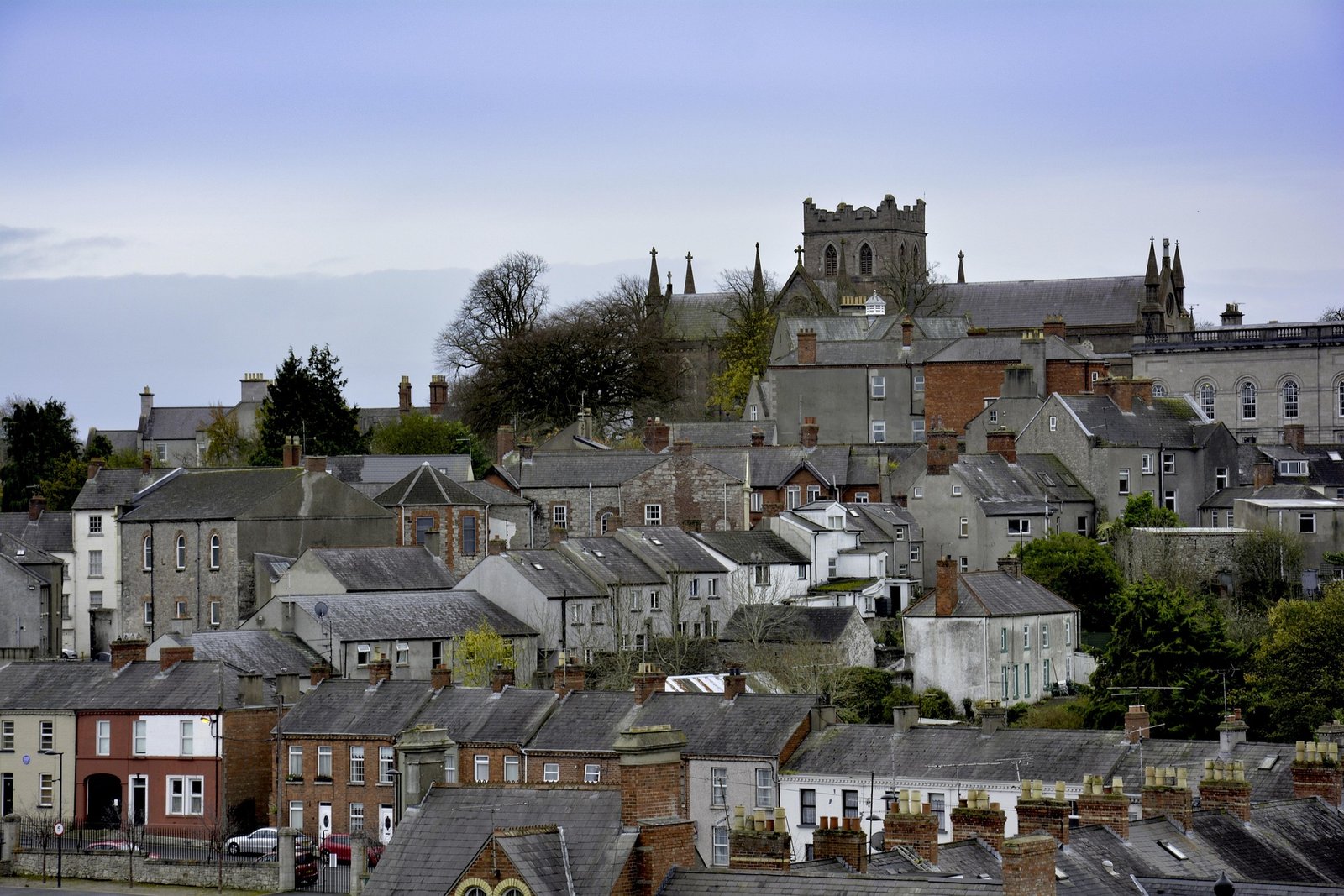
Armagh is famously known as the city of seven hills and is dominated by its two impressive St. Patrick’s Cathedrals.
The Church of Ireland cathedral carries the older history, while the Catholic cathedral was built after the famine on a hill overlooking the city. Both offer magnificent views across the surrounding drumlin countryside.
The Church of Ireland Gothic cathedral, rebuilt in the 1840s, stands proudly beside parkland and cultural buildings including the Market Place Theatre, visited recently by King Charles.
Nearby stands the memorial to Brian Boru, whose remains were reportedly brought here after the Battle of Clontarf.
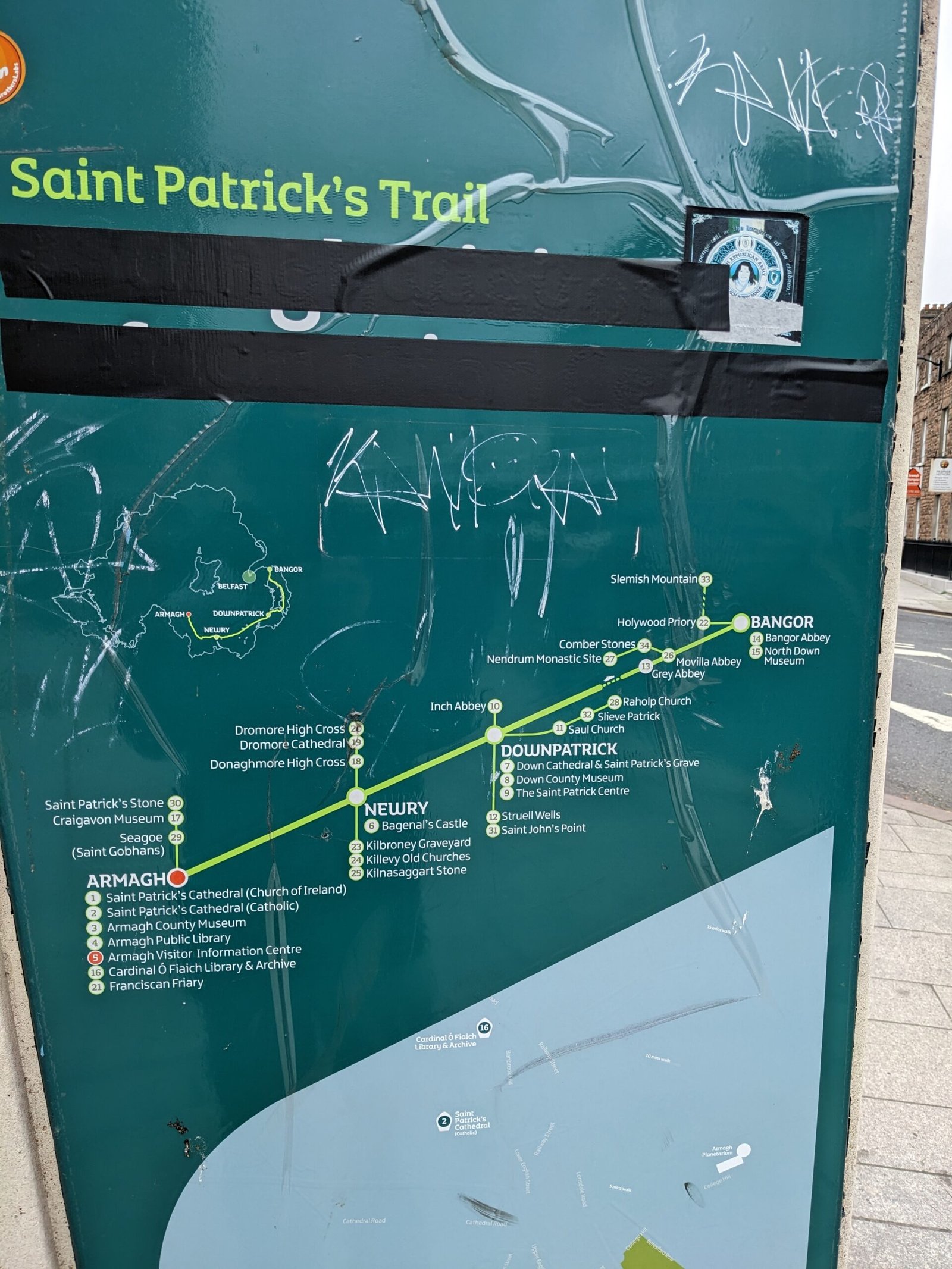
Visitors can also follow parts of the famous St. Patrick’s Trail stretching towards Downpatrick and the Antrim hills.
More information:
Visit Armagh Tourism
Food, Music and Local Culture
Armagh has a surprisingly lively food and music scene.
One popular recommendation is Uluru Bar & Grill, which even serves kangaroo alongside Malaysian seafood dishes and international cuisine.
Other recommended dining spots include:
- Embers
- Mulberry Bistro
- Red Neds
- Callan Bar at Armagh City Hotel
Traditional music remains an important part of city life. The famous “Hole in the Wall” pub is highly regarded, while local piping clubs continue strong traditions in Irish music and instrument making.
A Dublin friend later remarked how impressed he was by Armagh’s traditional music scene, describing it as one of the hidden gems of the island.
A City Moving Forward
Armagh experienced terrible violence during the 1970s and 1980s, with bombings, sectarian attacks and political division deeply affecting the city. Yet modern Armagh feels welcoming, peaceful and optimistic.
Locals proved exceptionally friendly during our stay. Even when asking for directions inside Devlins Bar, several people immediately offered assistance and local recommendations.
Armagh city has clearly undergone a renaissance and deserves much greater recognition as a destination on the island of Ireland.
Interested in Irish cultural destinations may also enjoy:
Achill Island Travel Series
Armagh Apples and Cider
Outside the city we visited the Troughton apple farm on the Portadown road, producers of the well-known Armagh cider sold across Ireland.
Armagh remains Ireland’s leading apple-growing county thanks to its unique microclimate and sheltered drumlin landscape near Lough Neagh.
The family-run farm offers tours, cider tastings and a wonderful farm shop selling juices, dry ciders and local produce. We sampled their excellent apple juice while meeting visitors from America touring the region.
Where to Stay in Armagh City
Hotel Recommendation
- Armagh City Hotel
Comfortable rooms, excellent breakfast and carvery dining, leisure facilities and ample parking in a very central location.
Official website:
Armagh City Hotel
Drinks and Food Recommendations
Pubs
Restaurants
- Uluru
- Keegan’s Bar & Restaurant
- Callan Bar
Getting There from Waterford
By car, Armagh is approximately 300km from Waterford and around a three-hour drive via the M9, M50 and M1/A1 through Newry.
Public transport options include:
- Train to Newry via Dublin, then bus to Armagh
- Bus from Dublin Airport on the X4 route towards Derry stopping in Armagh
Final Thoughts
Armagh combines Georgian elegance, religious heritage, excellent music, local food and fascinating history in a compact and welcoming city.
It feels peaceful today, while still honestly reflecting on its complicated past.
We left convinced that Armagh deserves far more attention from visitors across Ireland and beyond — and we certainly plan to return.