Breda is a fascinating Dutch city just over the Belgian border, north of Antwerp and Brussels. While it may not appear on every holiday hit list, we found plenty of intriguing things to see and discover.
Breda has a fascinating combination of military history, old churches, castles, town walls, traditional trading areas and a modern, progressive outlook.
For visitors from Ireland, there are also some surprising connections. During our visit, we discovered how Breda’s history is linked to King William III of Orange, while conversations with our local student guide gave us an opportunity to explain some of the continuing political and historical sensitivities surrounding King Billy in Ireland.
The city also impressed us with its approach to sustainability. The Stek Social Enterprise project showed how vacant land could be transformed into a thriving community of recycling, repair, restoration and creative businesses.
Breda is therefore a city where the past and the future sit comfortably alongside one another.
Getting There
Getting to Breda is relatively straightforward.
Breda is well connected by rail and is on the railway route linking major Dutch and Belgian cities, including Amsterdam, Antwerp and Brussels.
For Irish visitors, flying to Eindhoven provides another option, with onward travel by train to Breda.
The city’s location makes it particularly suitable for combining with other destinations in the Netherlands or Belgium.
Breda can also work well as part of a wider trip incorporating Antwerp, Brussels, Dordrecht or Amsterdam.
Exploring the Destination
Breda has a well-preserved historic centre with a mixture of old streets, churches, trading areas and attractive public spaces.
The city has a long tradition and has been important throughout the centuries. Locals are proud of their heritage, while the modern outer areas are typically Dutch in character, with organised streets and excellent cycle paths.
There is good-quality shopping in the centre, along with cafés, restaurants and places to relax.
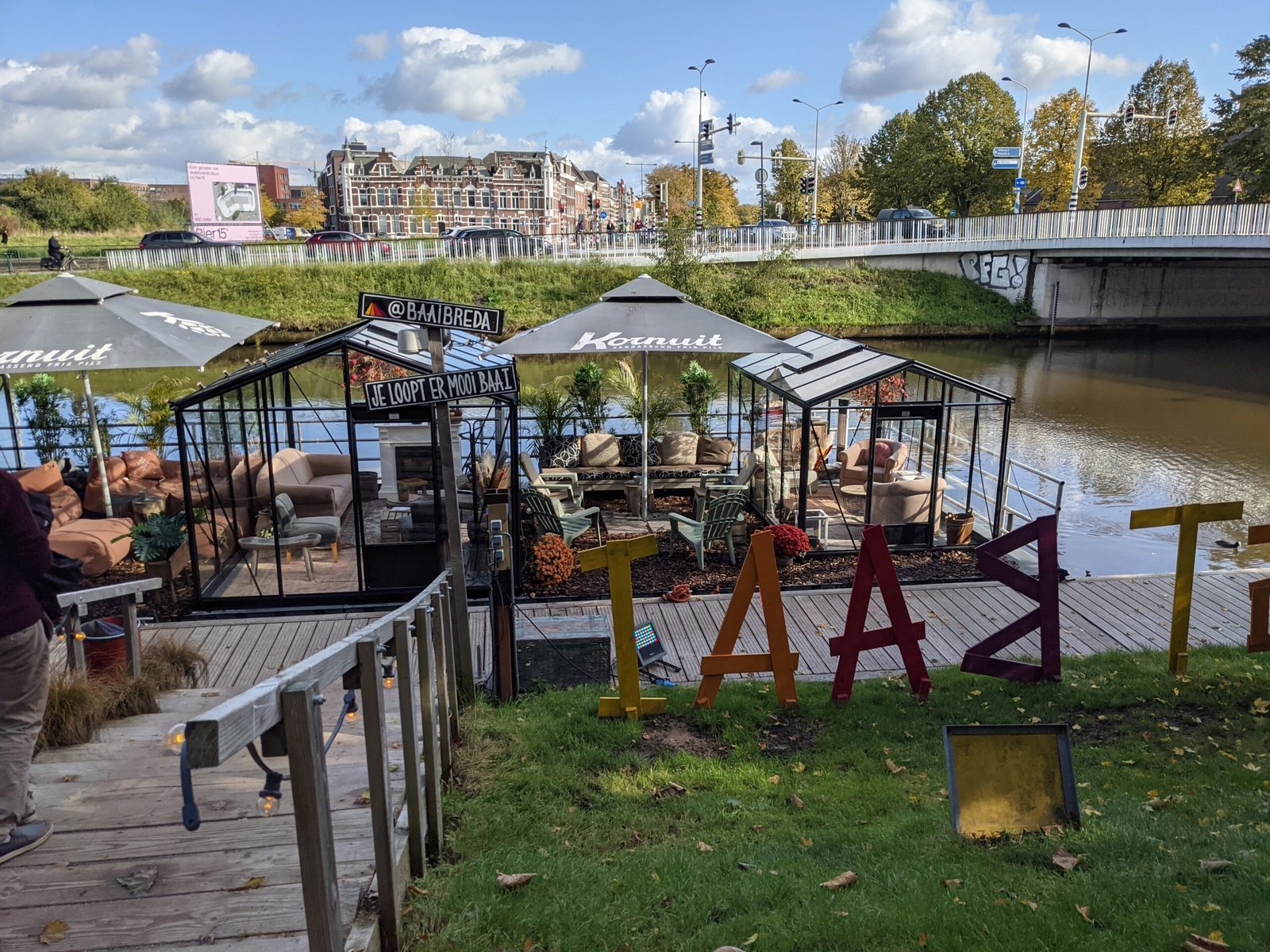
One of the most interesting aspects of Breda is the way historic areas have been adapted for modern use. Some river areas that were previously covered over for car parking have been reopened as walkways, creating more attractive spaces along the water with shops and pedestrian areas.
The city also has a number of well-preserved churches and historic buildings that continue to be restored, despite relatively low levels of church attendance among younger generations.
Our local guide, Joyce, was a young hospitality and tourism student with excellent English. Her college also welcomes international students and has exchange connections with Ireland.
Visitors can also discover a beguinage, an old religious community and garden dating back to the 1400s. These communities are particularly associated with Belgium, so finding one in Breda was another interesting discovery.
History & Culture
Breda has a strong military heritage.
The city has a castle, historic town walls and forts that illustrate its strategic importance over the centuries. The two towers along the river are symbols of the city’s historic past and liberation, while an old armoury provides another reminder of Breda’s military connections.
Some local families still have links with the military, and there is a military training fort in the area. Some residents have served overseas, including in the Balkans and Iraq.
Outside the Cathedral, near the old town wall, there was historically an execution area where hangings took place hundreds of years ago.
Breda and the House of Orange
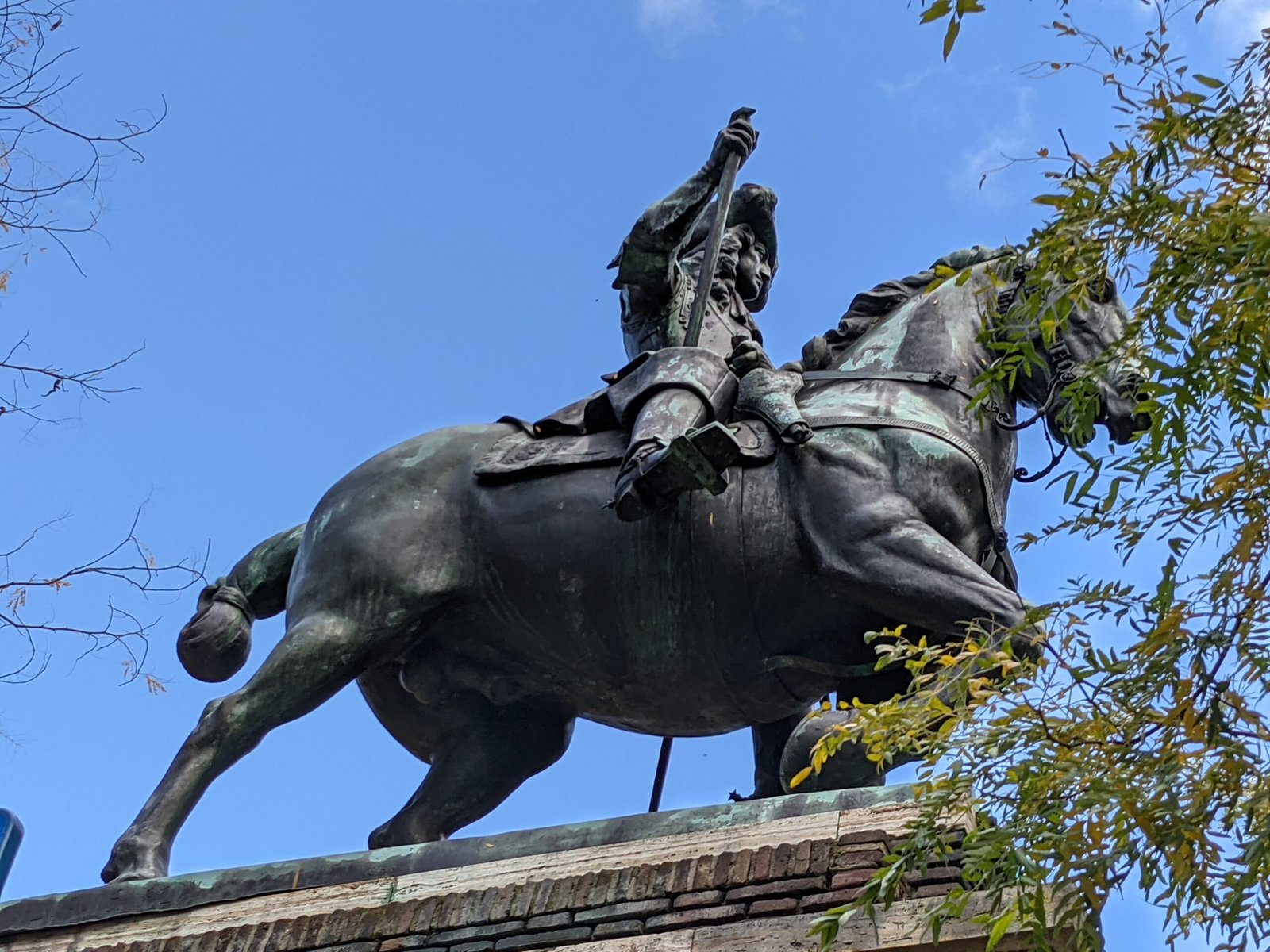
For Irish visitors, one of the most unexpected discoveries was Breda’s connection with William III of Orange.
King William III is a controversial historical figure in Ireland because of his victory at the Battle of the Boyne in 1690.
During our visit, we explained to our student guide how this history remains controversial in Ireland and how Orange traditions continue to feature in Northern Ireland.
We also discussed the tradition of bonfires and the burning of effigies associated with some communities and commemorations.
Our Dutch hosts found some of these continuing traditions rather surprising. Religion itself is much less prominent in everyday life for many younger people in the Netherlands.
Breda traditionally had a strong Catholic identity, while nearby Dordrecht became associated with Protestantism. The contrast between the two cities provides an interesting insight into the religious history of the Netherlands.
Food & Dining
Breda has a good selection of restaurants, cafés and food venues.
Humphreys Restaurant, close to the market, was recommended during our visit and is a good option for those looking for a traditional restaurant experience.
For a wider selection, the Breda Food Hall offers multiple food choices, including different ethnic cuisines. Food halls have become increasingly popular in Dutch cities and are a good way to sample different styles of food in one location.
For Irish visitors looking for somewhere familiar, O’Meara’s Irish Bar is a good place to watch matches and enjoy Irish-style sessions and hospitality.
The Stek project also had an excellent sourdough bakery. The bakery used repurposed older ovens and was extremely popular on the day we visited, with a queue forming for bread.
Things to Do
Explore Breda’s Historic Centre
Take time to walk through the old town and discover its historic buildings, churches, squares and streets.
Discover the Military Heritage
Breda’s castle, fortifications, armoury and town walls provide an insight into the city’s strategic importance and military past.
Visit the Churches and Cathedral
Breda has several impressive religious buildings, including its Cathedral, which continues to be carefully maintained and restored.
Explore the Beguinage
The old beguinage and its gardens provide a peaceful glimpse into the city’s religious and social history.
Enjoy the Shopping
Breda has good-quality shopping throughout the city centre, making it a pleasant destination for a leisurely day of exploring.
Discover Stek Social Enterprise
One of the highlights of our visit was Stek, an unusual community of recycling, repair and creative businesses.
This deserves a story of its own.
Stek Social Enterprise: A Success Story in Breda
One of the most impressive discoveries in Breda was Stek Social Enterprise, a former vacant area near the old port that had been controlled by the local council.
Around 2014, a group of enterprising people approached the council with an idea for creating a green and recycling-focused business community.
The idea was simple but ambitious: if entrepreneurs could have access to land, water and electricity connections at modest cost, they could establish small businesses focused on recycling, restoration and sustainable enterprise.
The progressive council responded positively.
At the time, there was growing interest in the green economy, and the site became an opportunity to try something different.
Planning rules were relaxed for the location, allowing the entrepreneurs to create workshops from recycled materials.
Many of the workshops were built using recycled timber, old windows and other reclaimed materials.
Even the café and restaurant were constructed using recycled timber pallets and windows taken from old buildings and churches.
Around 30 businesses operated from the site.
Recycling and Repair
The businesses were incredibly diverse.
We met an Irish woman from Galway, Fiona, whose husband Jilles recycled plastic from crushed CDs.
They had a special machine that crushed the plastic, allowing them to create small plastic wall tiles from old CDs and similar materials.
Fiona also teaches IT in Breda.
Another business specialised in furniture restoration, while others repaired bicycles or built renewable bikes from old parts. New brake pads were still required, but the idea was to reuse as much as possible rather than send old bicycles to landfill.
People donated unwanted bicycles for reuse.
There were also businesses involved in boat building and repairing old boats and timber.
Another workshop restored old domestic steel stoves, some of which could be used for garden or outdoor heating.
Vintage and Creative Businesses
The creativity continued throughout the site.
Chantal was restoring old domestic china and combining it with old dressers to create vintage-style kitchens and living spaces.
Nearby, Verena was buying and selling wine in bulk. Having lived in the Czech Republic, she was familiar with the practice of reusing bottles and selling wine from different parts of Eastern Europe.
She sold good-value wines from countries including Croatia, the Czech Republic, Romania, Bulgaria and Macedonia.
There was also a shop where customers could buy products such as pasta, grains and dry foods without unnecessary packaging — a concept similar to a Dungarvan shop.
Textile workers used old materials and lace to create new designs for clothing and home interiors.
There was also a toy business where wooden toys were restored, repainted and resold.
The BBC programme The Repair Shop is a good example of how traditional repair skills can be brought back into use, and Stek demonstrated how these skills could work as small businesses.
There was even a handyman and a beachcomber who collected objects from the sea.
Collaboration Was Key
One of the most interesting aspects of Stek was the collaboration between the businesses.
The entrepreneurs encouraged one another and shared ideas.
Rents were modest, making it possible for self-employed people and small businesses to establish themselves.
An overall administrator helped coordinate the site.
Some businesses eventually moved on to larger premises, while others remained at Stek.
The project was always intended to be reviewed because the land could eventually be developed for housing, but there was an expectation that the businesses would be offered another location.
A Straw House and Recording Studio
Our guide, Marga, was also a standholder at Stek.
Her late partner had built a special straw house similar to those we see at Ferrycarrig in County Wexford.
The building became a recording studio, yoga lounge and eventually a tuition and therapy centre.
The roof was constructed from timbers leaning over one another, creating an unusual teepee-like effect.
Nearby was the sourdough bakery, the old record store selling vinyl, CDs and musical instruments, and a computer recycling and repair business.
It was an extraordinary collection of small enterprises.
Could Stek Work Elsewhere?
We found the whole project particularly intriguing and wondered whether something similar could be replicated in Waterford using vacant land or buildings.
With around 30 trading businesses, mostly self-employed entrepreneurs, Stek demonstrated how a vacant area could become an active community.
The project showed that sustainability does not have to mean large corporations or expensive developments.
Sometimes it can start with a group of people, a vacant site, a little imagination and a council willing to try something different.
Where to Stay
Breda offers accommodation ranging from budget hotels to more luxurious historic properties.
One particularly interesting option is Hotel Nassau Breda, which occupies a former convent. The Nassau name is also strongly associated with the Dutch royal family and Breda’s history.
For budget travellers, Motel Sutor was recommended as a good-value option.
The city’s central location and excellent transport connections also make it possible to stay in Breda while exploring nearby Dutch and Belgian destinations.
Local Tips
Breda is easy to explore on foot, particularly around the historic centre.
Cycling is an important part of everyday life, so watch for cycle lanes when walking.
Allow time to explore beyond the main tourist attractions.
The military history gives Breda a different character from many Dutch city destinations.
Look out for the city’s connections with the House of Orange.
The beguinage is worth visiting for a quieter historical experience.
Food halls are a useful option if travelling with a group with different tastes.
O’Meara’s Irish Bar can be a good meeting place for Irish visitors.
If you are interested in sustainability, recycling or social enterprise, allow extra time for discovering projects such as Stek.
Breda works particularly well as part of a wider trip combining the Netherlands and Belgium.
Final Thoughts
Breda surprised us.
It is not necessarily the first Dutch city that comes to mind when planning a European city break, but that is part of its attraction.
The city has a fascinating military past, an important religious and royal history, a well-preserved old town and strong connections with the House of Orange.
For Irish visitors, the discussions around William III and the Battle of the Boyne add another unexpected historical dimension.
But what really stood out to us was Breda’s modern and progressive side.
Stek showed what can happen when a local authority gives entrepreneurs the opportunity to experiment with vacant space. Recycling, repairing, restoring and reusing were not simply ideas — they had become working businesses supporting a community of creative people.
With its historic centre, good transport links, shopping, food and cycling culture, Breda deserves more attention from travellers looking for somewhere different in the Netherlands.
Sometimes the places that are not on everyone’s holiday list are the ones that provide the biggest surprises.
Related Articles
Useful Outbound Links
Official Breda tourism information
Dutch national railway information for travel to Breda
Eindhoven Airport information
Netherlands tourism information
Breda city information
Stek Breda / sustainable enterprise information